Spill, Simmer, Falter, Wither

sara baumeI’ve just finished reading Sara Baume’s award-winning Spill, Simmer, Falter, Wither. I thought it was a fantastic creation, a hugely impressive  piece considering that it breaks many of the rules of storytelling. Very little happens. There’s a scant amount of dialogue (if any?). The main character – the narrator – isn’t hugely likeable… And yet, it really works –  what a great achievement.

As it is such an unusual book I was prompted to read the reviews on Amazon (with my writer’s hat on) to see what others made of it.

Predictably, for over three-quarters of reviewers, it was a four or five star read. Many said that they thought it was one of the best things they’d ever read: “poignant and thought-provoking”, “quietly brilliant”, “unbelievably moving” – you get the drift.

Unsurprisingly, some didn’t rate it so highly – but it’s easy to see that it wouldn’t necessarily be everyone’s cup of char.

But one review really amused me, from one of those people who not only will tell you that they don’t like your work, but exactly where you, in your naive stupidity, have gone wrong: “…this book is flawed. It’s a shame that the reviews it has gathered (here and in national newspapers) have been so lacking in critical analysis. It’s not good for a young author to be left unaware of the ways in which her work could improve…” 

I wonder if this reviewer marks exam papers as her day job?
 

Thanks to Erewash Writers’ Group

My story Would Love to Meet was recently awarded third prize in the Erewash Writers’ Group Open Competition, judged by Simon Whaley. You can read it here.

One of the joys of entering competitions is reading the winning entries and this selection showcased a superb range of different styles and talents. Congratulations to all the other winners and many thanks to the organisers and judge.

What’s the point of storytelling?

Recently I’ve been thinking a lot about storytelling and why it’s so important. Not just the big Why? question (as in why do it?) but more, what’s the worth of it, how does it fit into the scheme of things, where would we be without it?

One of the most powerful summaries of what I think is reflected in this comment from Joan Didion who said ““We tell ourselves stories in order to live.” Certainly that sums up the whole point of it, going right back to the days before the printed word. As story-tellers, writers and listeners/readers, we need stories and their embodiment of shared experiences, possibilities and emotions in order for us to be able to make sense of the world outside ourselves. And to be able to deal with that world, on every level.

Another quotation that, as an introvert, really resonates with me is one from novelist John Green: “Writing is something you do alone. It’s a profession for introverts who want to tell you a story but don’t want to make eye contact while doing it.”

How true. Take away writing and the voices of many would be silenced (though there are plenty of amazing extrovert writers, I’m sure!).


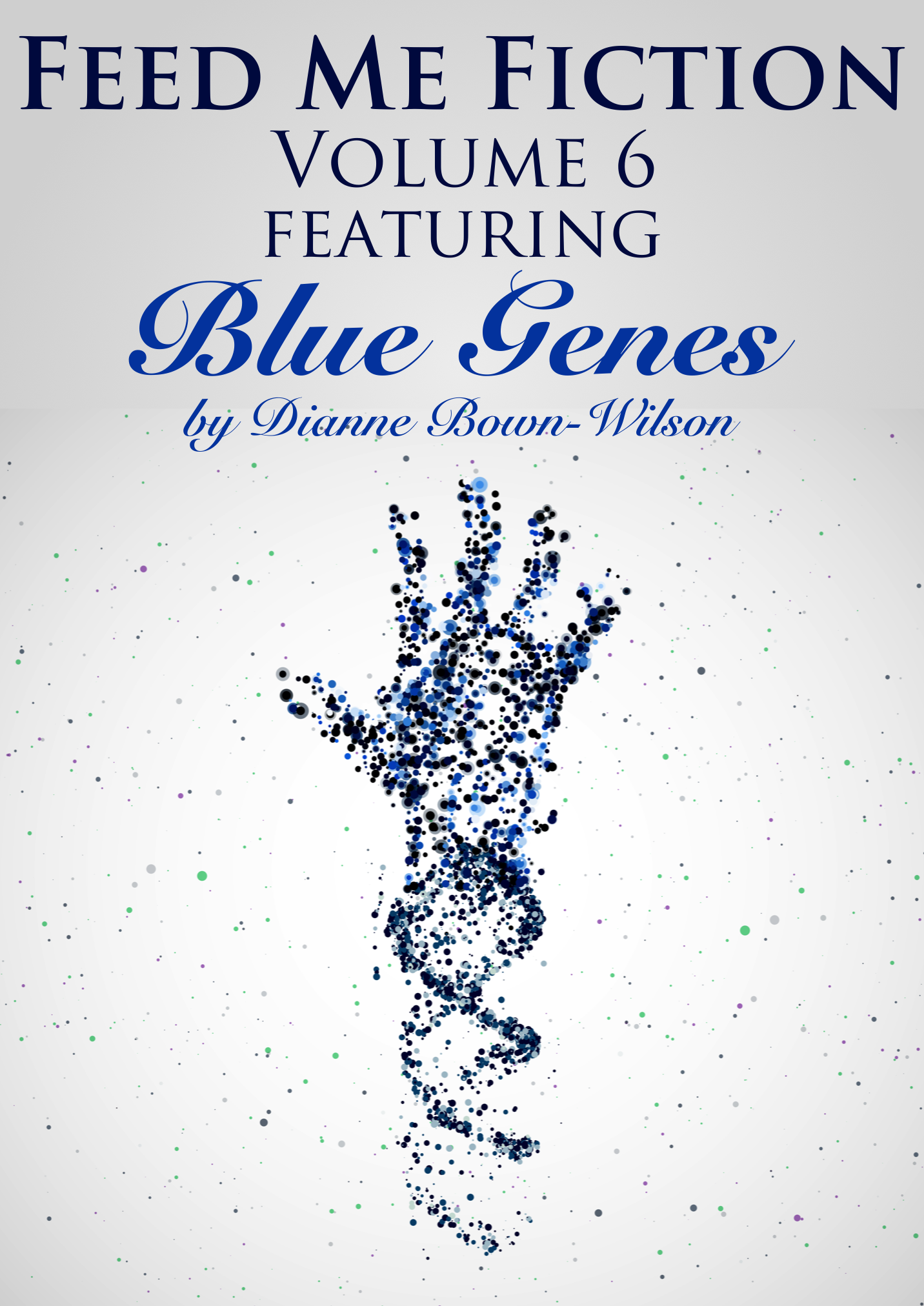
Love that cover!

Feed-Me-Fiction-Vol-6Vol 6 of Feed Me Fiction from Fictuary is out now, featuring my own story – Blue Genes  – and a specially designed cover. I’m soooo impressed and delighted.

The icing on the cake (and who doesn’t like icing?) is that my story Ursus Maritimus got an honourable mention in their latest competition.


How difficult is it to write a short story?


I was impressed by an interview with the writer Edith Pearlman published on the excellent University of North Carolina Lookout site.

In it, in response to the question ‘What is your creative process?’ she said:

Each short story takes several weeks (five days a week, about four hours a day) to write, in many, many drafts, all on the typewriter. The draft then marinates in a drawer while I work on the next story or piece. The marinated story finally gets withdrawn, re-revised, typed at last into a word processor, and presented to my dear friend, colleague and ruthless reader Rose Moss, who usually sends it back to the typewriter for another few weeks of revision. So each story takes about a month and a half in total time.

When asked for her advice for  new and emerging fiction writers, she added:
Revise. Revise each story from beginning to end at least three times. When I say revise I mean rewrite completely.

Although reading sage advice about the process doesn’t in itself help the quality of the output, I found this reassuring ammunition against those who imply that short-story writing is a quick and simple process…

The Momaya Annual Review 2015

momayaThe Momaya Annual Review has just been published and I’m delighted that one of my stories – In the Frame – has been included. It received an honourable mention in the Momaya Press short story competition with the theme this year being ‘treasure’.

The foreword of the book starts with the words:

“You are holding in your hands a compilation of some of the finest short stories written in English this year.” Wow.

Writing and Reviewing on Taylz

taylz-logoTaylz is a new site for short story writers – and readers. Its aim, so it says is “to build a comprehensive library of the latest, most exciting new short stories available online. We want Taylz to be a natural port of call for readers interested in new voices in fiction, as well as a lively, creative forum where new and established writers can receive constructive feedback.

We’re interested in stand-alone stories that can be read in one 15-20 minute sitting (1500-8,000 words)– ideal for the average commute, lunch break, or as a bedtime read.”

Taylz is launching the site in two phases. Phase 1 is the story-building phase which is exclusively for writers.  This will build up a bank of stories and writers, that can then be used to attract readers for Phase 2  – which will be aimed at the reading public across the English speaking world.

Please do take a look. This seems a very promising outlet for developing writers. Becoming involved in the site also provides a very useful reminder of how much one learns through the reviewing process about one’s own weaknesses.